10 posts

Articles

#gitops#kubernetes#helm#vault#releng#observability
The Queryable Platform Part 1: Your Platform Is a Graph — You're Just Not Querying It Yet

The Queryable Platform Part 1: Your Platform Is a Graph — You're Just Not Querying It Yet

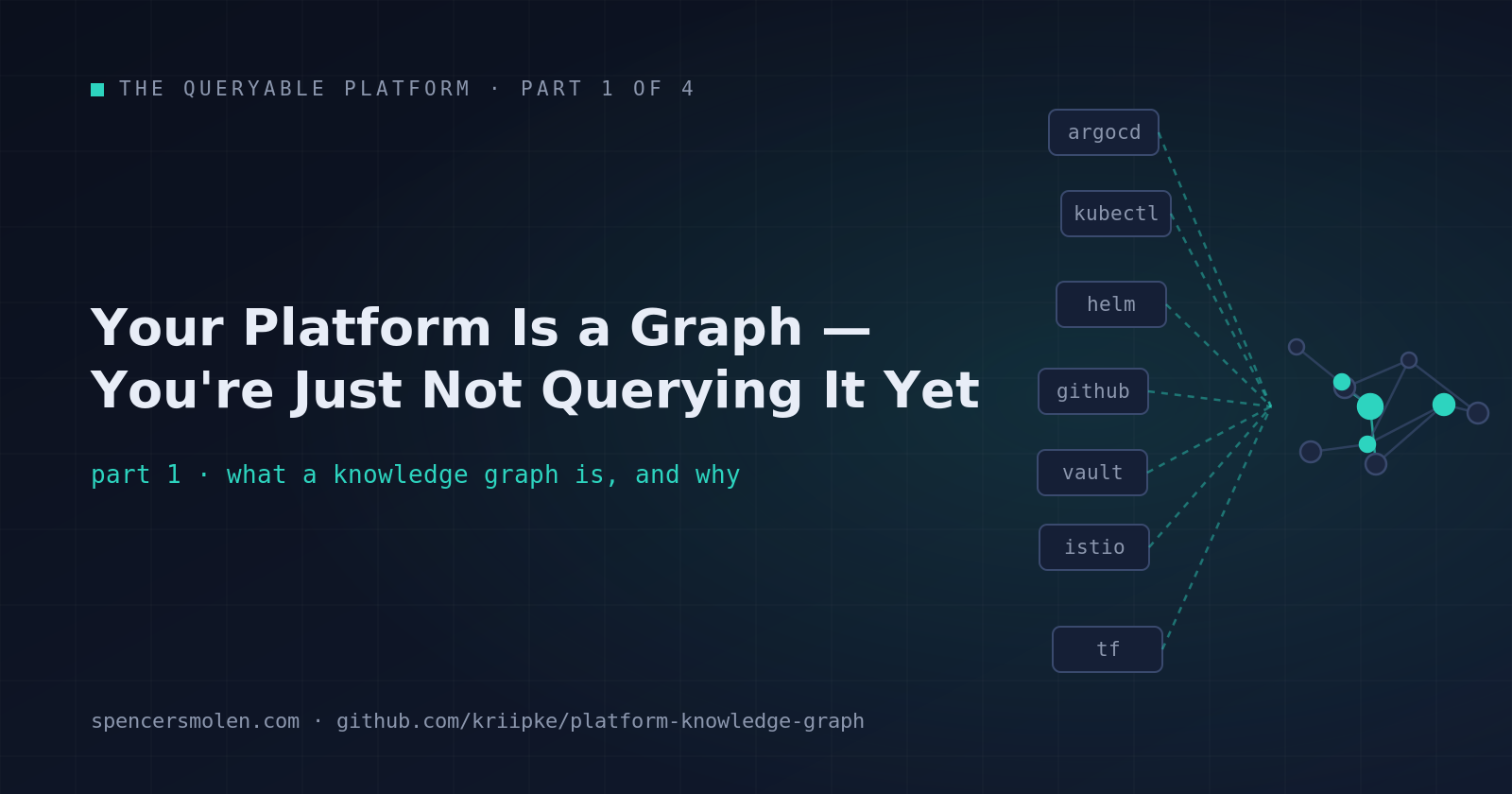
The knowledge to answer 'which services are exposed to the internet, and who owns them?' already exists — it's just scattered across a half-dozen tools that don't talk to each other. A knowledge graph is how you make it queryable.
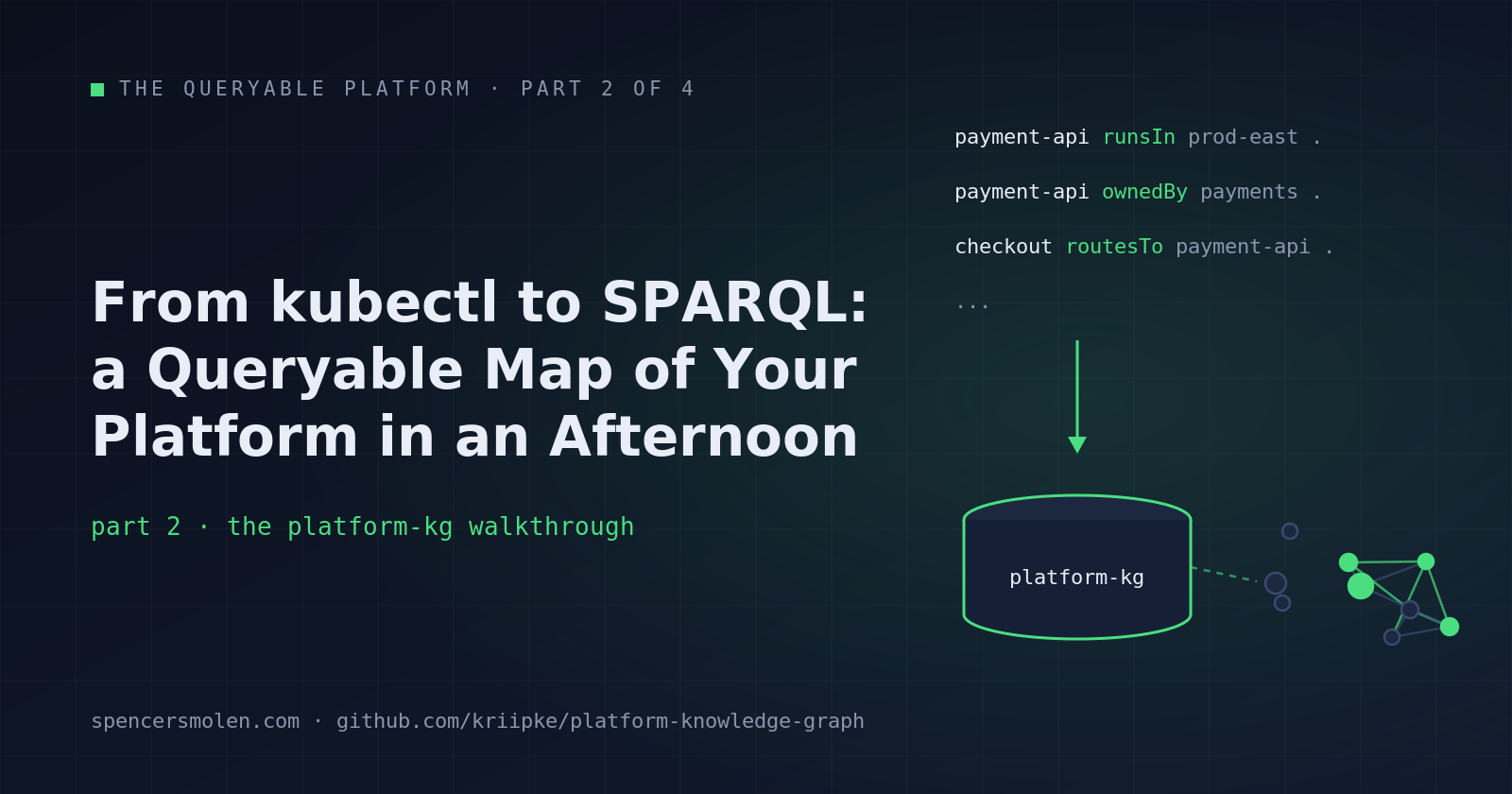
The Queryable Platform Part 2: .From kubectl to SPARQL -- Build a Queryable Map of Your Platform in an Afternoon

The Queryable Platform Part 2: .From kubectl to SPARQL -- Build a Queryable Map of Your Platform in an Afternoon

A walkthrough of platform-kg: extract facts from ArgoCD, Kubernetes, Helm, GitHub, Terraform, Vault, and Istio, turn them into RDF triples, and load them into GraphDB — a graph of your actual cluster you can query in a browser.

The Queryable Platform Part 3: Blast Radius Is Just Topology Read in Reverse

The Queryable Platform Part 3: Blast Radius Is Just Topology Read in Reverse

Once you have a graph of your platform, the obvious question is: now what? It turns out there's a ladder of answers — inventory, ownership, dependencies, blast radius — each rung built on the one below, with real SPARQL at every step.

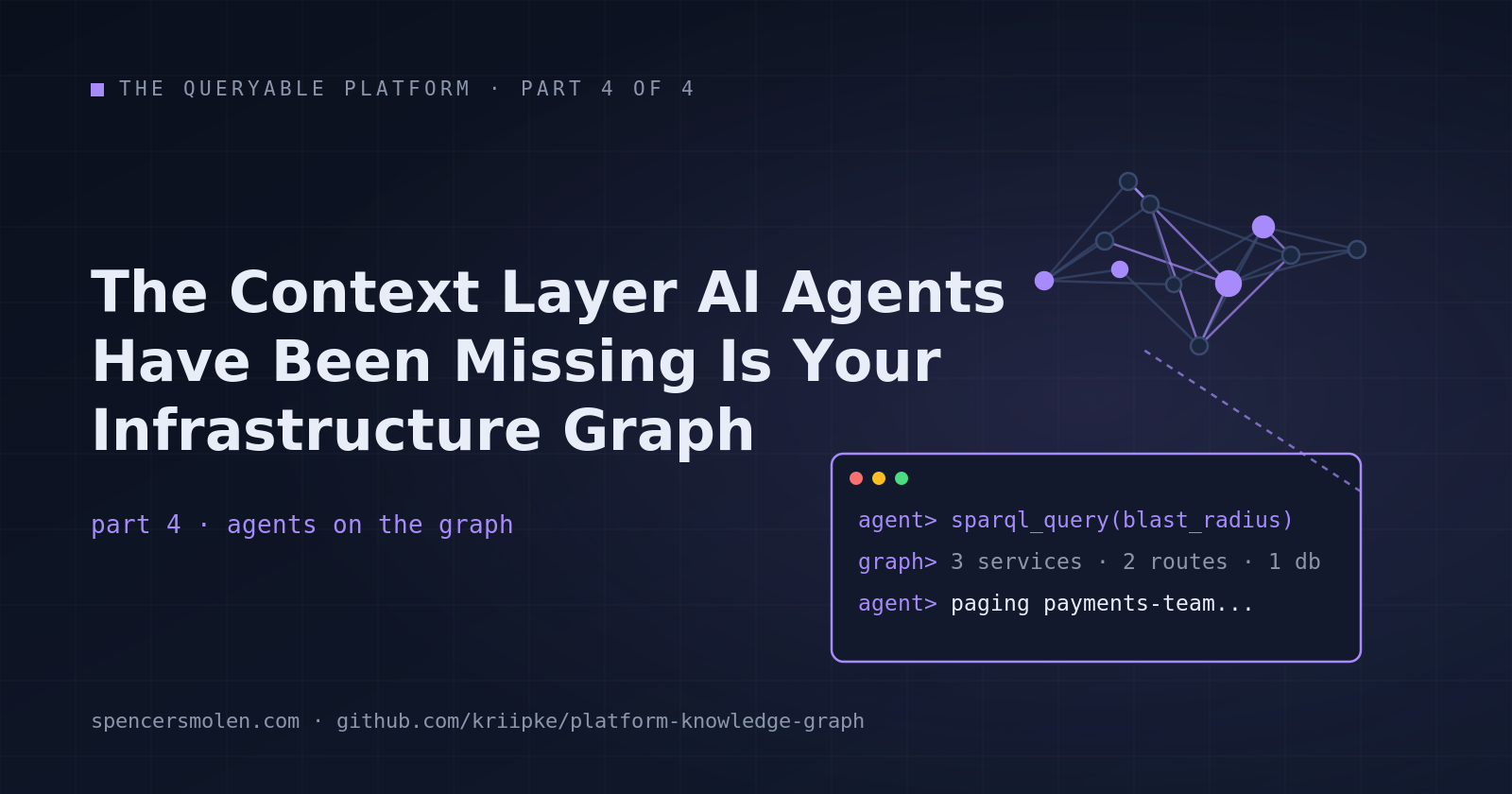
The Queryable Platform Part 4: The Context Layer AI Agents Have Been Missing Is Your Infrastructure Graph

The Queryable Platform Part 4: The Context Layer AI Agents Have Been Missing Is Your Infrastructure Graph

In 2026, the hard part of putting an AI agent on your infrastructure is no longer the AI — it's giving the agent something trustworthy to reason over. A platform knowledge graph is exactly that context layer, wired in over MCP.

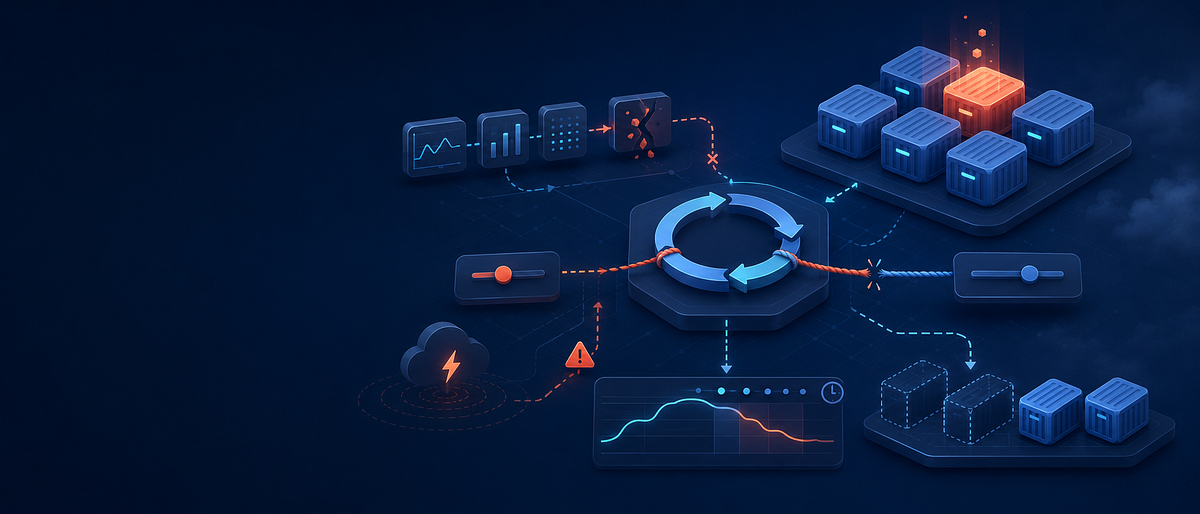
Common Gotchas When Working with HPAs in Kubernetes

Common Gotchas When Working with HPAs in Kubernetes

The Horizontal Pod Autoscaler looks simple, but missing metrics, unset requests, averaging behavior, and stabilization windows can make it quietly do the wrong thing.

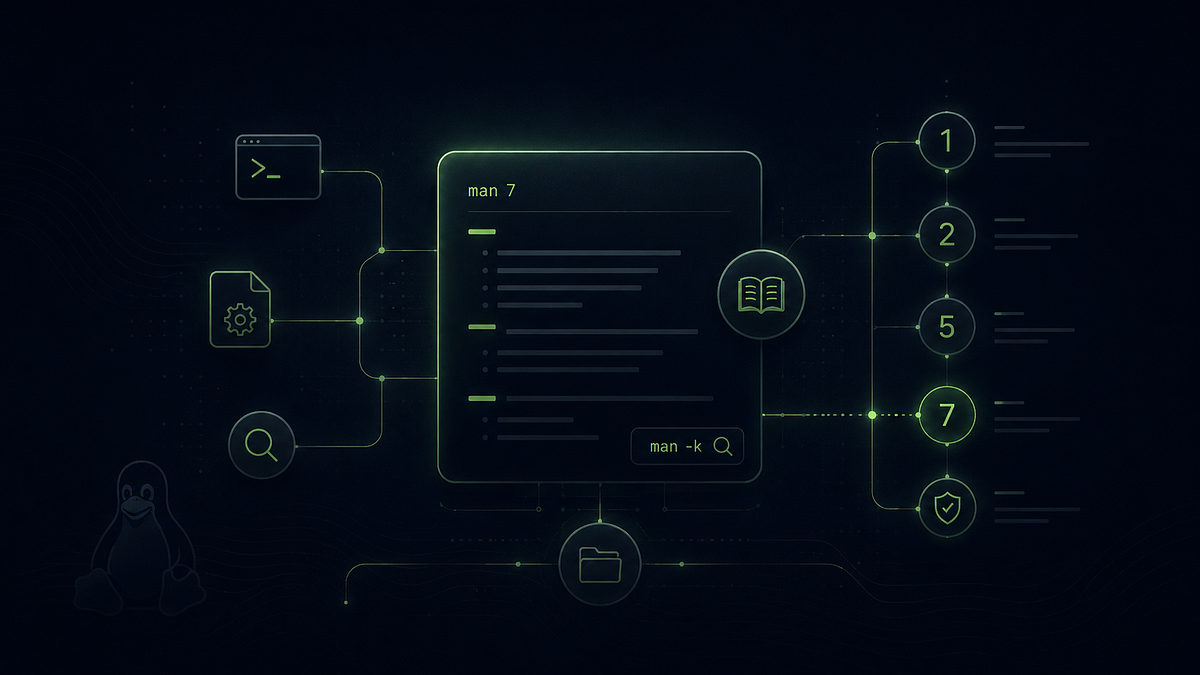
Learn How to Learn Linux: Part II

Learn How to Learn Linux: Part II

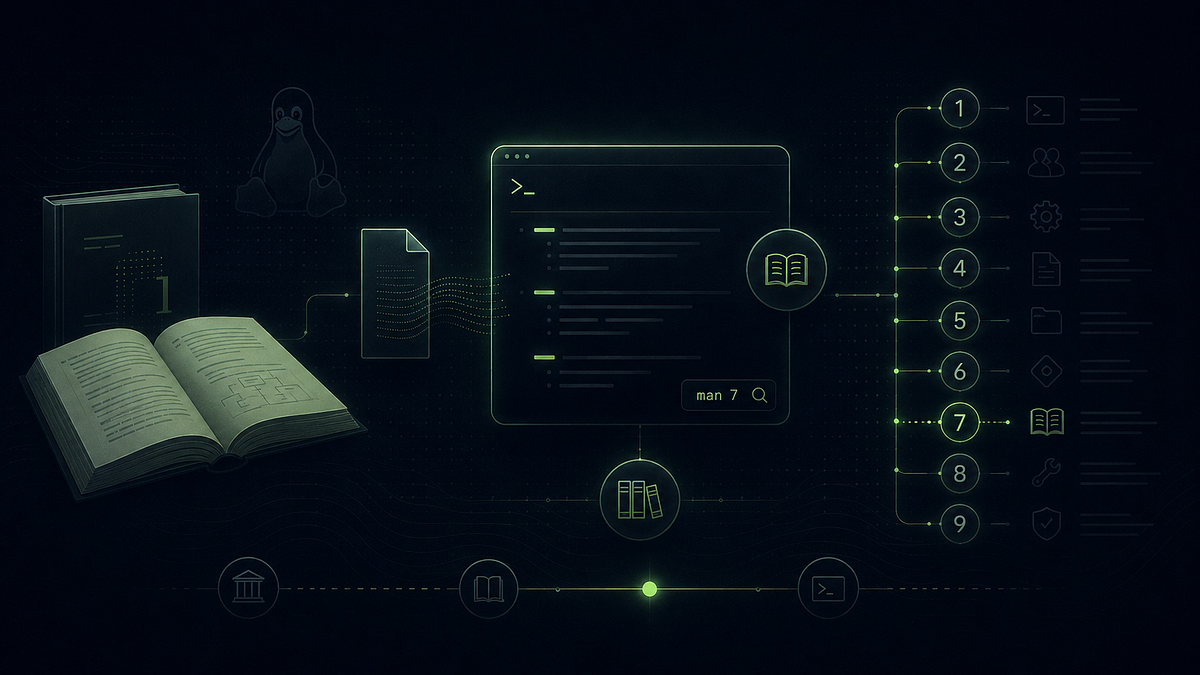
A practical tour of man page sections, local documentation paths, and command-line discovery techniques for learning Linux from the system itself.

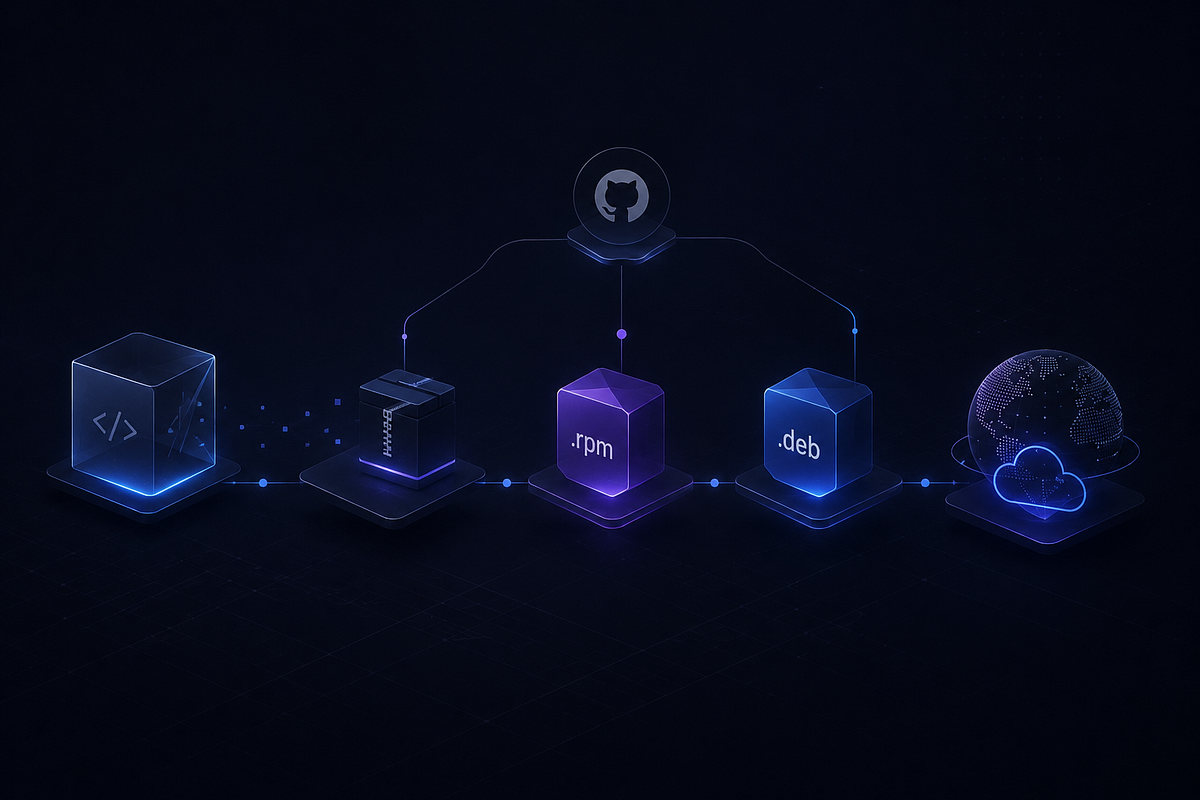
Creating an Automated RPM Build Pipeline using GitHub Actions

Creating an Automated RPM Build Pipeline using GitHub Actions

How to connect traditional RPM packaging with GitHub Actions so packages can be built, archived, and distributed through a repeatable CI pipeline.

Debugging Bash Scripts with $PS4

Debugging Bash Scripts with $PS4

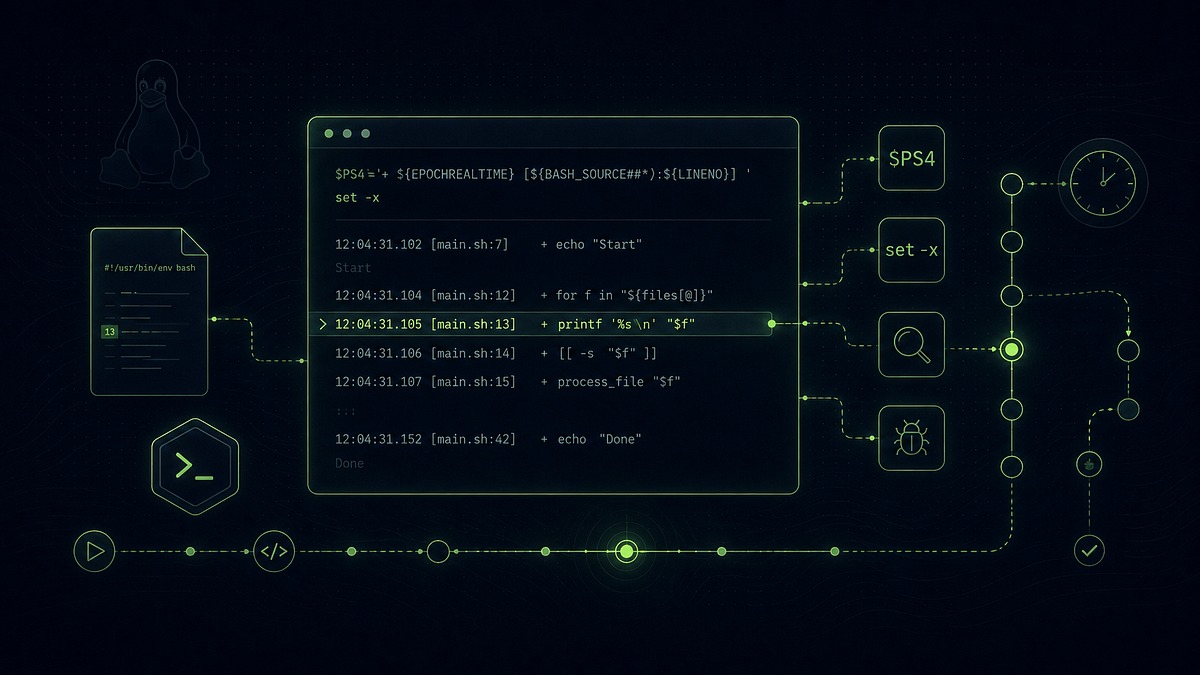
Using Bash's PS4 prompt with set -x to add timestamps, file names, line numbers, and useful context to shell trace output.

Learn How to Learn Linux: Part I

Learn How to Learn Linux: Part I

A deep look at Linux's built-in documentation culture, from the Unix Programmer's Manual to the man page system, and why learning how to use it changes how you learn Linux.

Creating an Ansible user in Linux

Creating an Ansible user in Linux

Creating a dedicated non-root Ansible user with sudo access and SSH key authentication for more secure Linux host management.

© 2026 Spencer Smolen Chattanooga, TN